Machine vision vs manual inspection: when automation adds value
Compare automated visual inspection with manual quality checks and understand where machine vision improves repeatability, speed, traceability and process control.
Inspection consistency is a process issue
Human inspection is flexible and valuable, especially for low-volume or highly variable work. But fatigue, interpretation and production pace can make repeated pass/fail decisions inconsistent. Machine vision is useful when the feature can be imaged reliably and evaluated against objective criteria.
Where machine vision is strongest
High-repeatability tasks such as presence checks, orientation, dimensional verification, code reading, label verification and clearly defined surface defects are good candidates. The system can make every inspection with the same programmed logic and record results automatically.
Where manual inspection still matters
Not every defect is suitable for automation. Subjective appearance, difficult materials, uncontrolled product presentation or rare complex defects may still require trained human judgement. A feasibility study should confirm image contrast and variability before equipment is specified.
The real value is integration
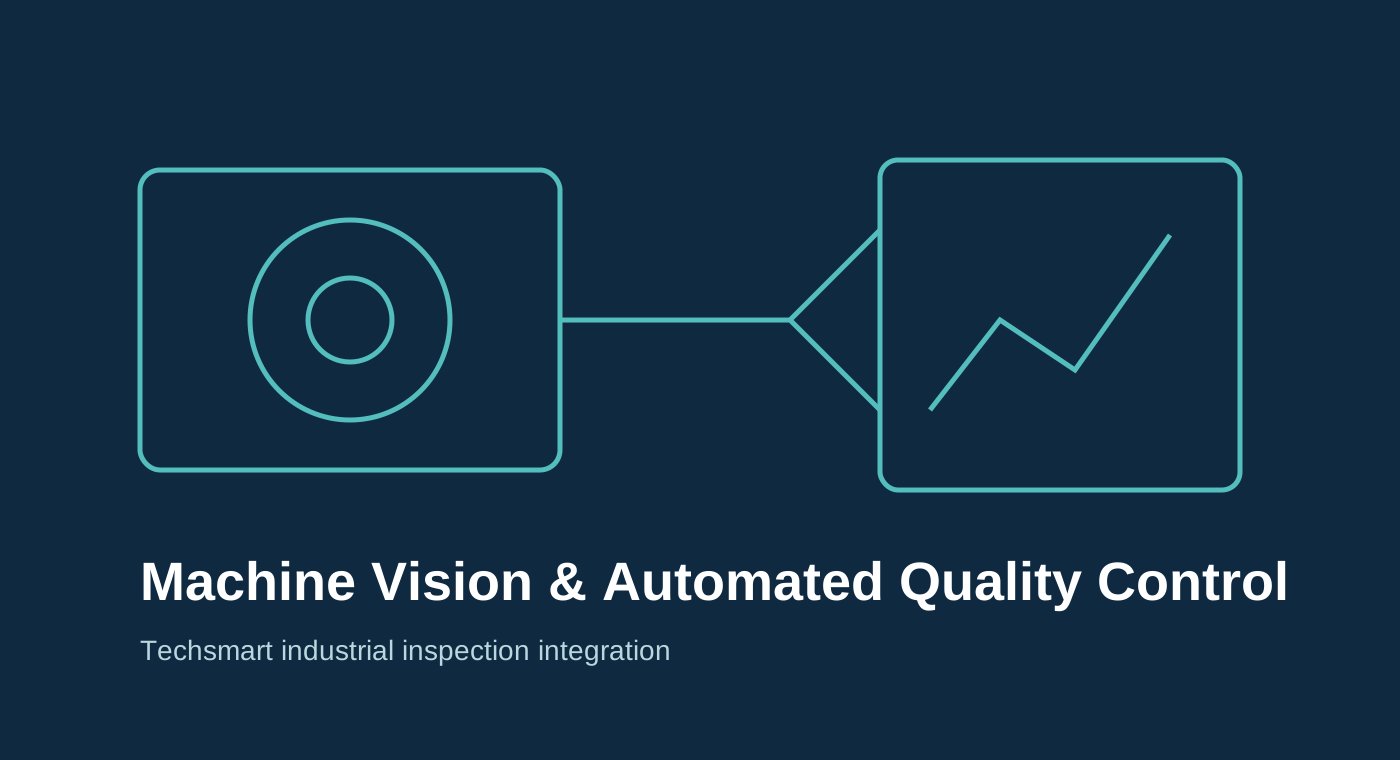
The camera is only one part of the system. Production value comes from triggering, PLC handshakes, reject control, HMI diagnostics and traceability. An inspection result that cannot be acted on reliably is not yet a complete quality-control system.
How to start
Collect good and defective samples, define the smallest defect that matters, document line speed and product variants, and identify what should happen after a failed inspection. This creates a measurable engineering brief.
Need help with this type of project?
Techsmart provides engineering, integration and field support for industrial equipment.
View related service